
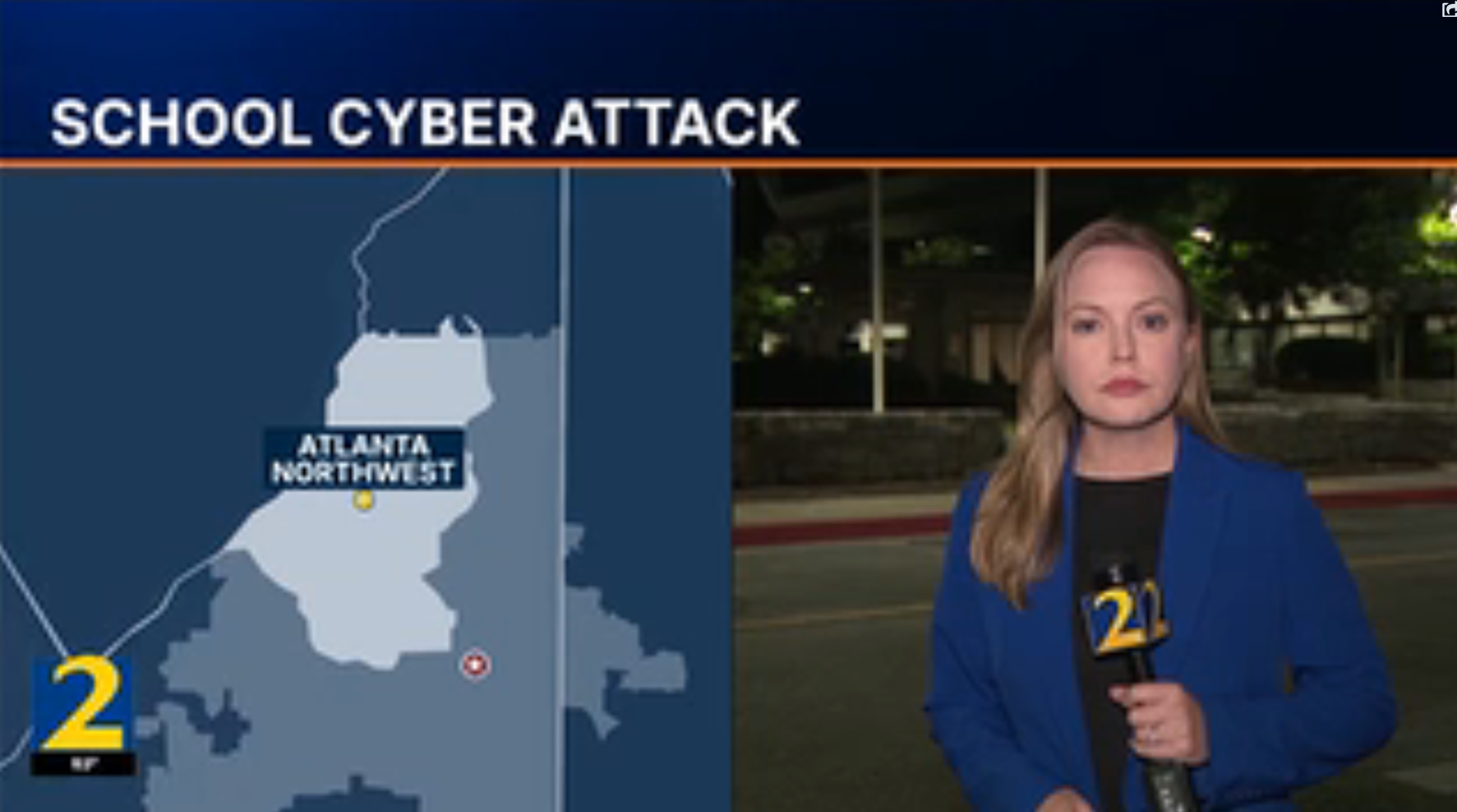
This week, news broke that cybercriminals targeted the popular education platform Canvas, impacting schools and universities across the country, including organizations here in metro Atlanta. According to reports, attackers may have accessed user data including names, email addresses, and private messages within the platform.
I spoke with WSB-TV Channel 2 Atlanta about the incident and what it means for parents, schools, and students moving forward.
The reality is simple: educational platforms have become high-value targets for cybercriminals. Schools hold enormous amounts of sensitive information, and unlike many enterprises, they often operate with limited security staffing and constrained budgets.
What makes this incident particularly concerning is not just the exposure of names or email addresses. It’s the potential misuse of private communications and student-related information. When attackers gain access to communication platforms used daily by students and teachers, the risks quickly move beyond technology and into personal safety, social engineering, harassment, and targeted manipulation.
Parents should use this event as an opportunity to have direct conversations with their children about online safety.
Students need to understand:
- Never share personal information through unsolicited messages
- Be cautious of anyone asking for photos or sensitive details
- Report suspicious communication immediately
- Avoid clicking unknown links or responding to pressure tactics
- Understand that cybercriminals frequently impersonate trusted individuals
Cybercriminals increasingly leverage stolen data to build believable phishing and impersonation attacks. Even seemingly harmless information can be weaponized when combined with social engineering techniques.

Educational institutions also face increasing pressure to evaluate vendor risk management more carefully. Modern school systems rely heavily on third-party cloud platforms for communication, assignments, grading, and collaboration. When one vendor suffers a breach, the downstream impact can affect thousands of students, parents, teachers, and administrators almost immediately.
Organizations should be asking difficult questions:
- How is student data segmented and protected?
- What monitoring exists for third-party vendor access?
- What incident response procedures are in place?
- How quickly can schools notify families and mitigate exposure?
- What contractual obligations exist between districts and software providers?
Incidents like this also reinforce the importance of layered cybersecurity programs that include:
- Security awareness training
- Multi-factor authentication
- Vendor risk assessments
- Continuous monitoring
- Incident response planning
- Data retention and minimization strategies
While technology providers continue investigating the scope of this incident, one thing remains clear: cybersecurity is no longer simply an IT problem. It is a safety, privacy, operational, and community trust issue.
Parents, educators, administrators, and technology providers all have a role to play in protecting students in an increasingly connected world.
I appreciate WSB-TV and reporter Courtney Francisco for covering this important issue and helping bring greater awareness to the growing cybersecurity risks facing educational institutions today.
Leave a Reply
You must be logged in to post a comment.