
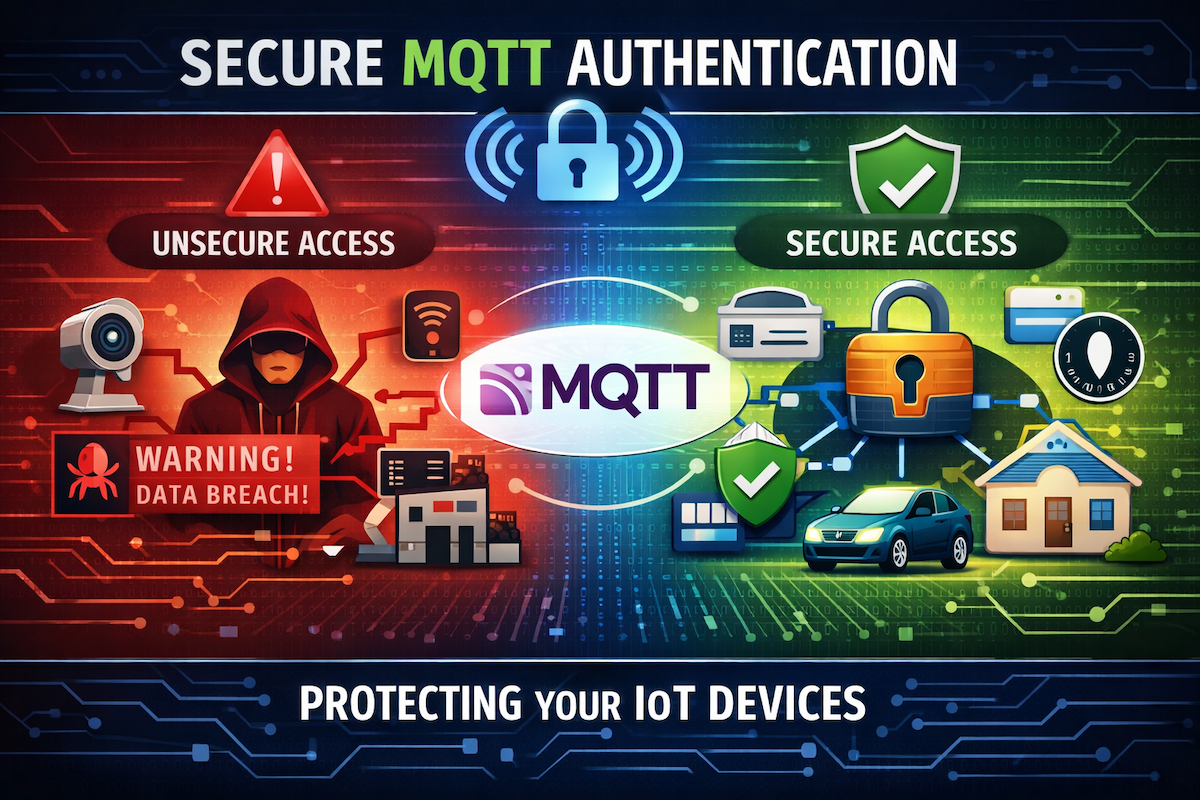
MQTT (Message Queuing Telemetry Transport) is a lightweight messaging protocol designed to provide efficient data transmission over wireless networks, such as those found in the Internet of Things (IoT). It is commonly used for device management and monitoring, allowing for real-time communication between devices and back-end servers. MQTT is known for its low overhead and high scalability, making it an ideal choice for large-scale IoT deployments.
One of the primary concerns with MQTT is security. Without proper authentication measures in place, unauthorized devices can access sensitive data and even modify or disrupt the functionality of other devices on the network. For example, a rogue device could send forged messages to other devices, causing them to malfunction or behave unpredictably. Additionally, without authentication, attackers could gain access to the MQTT broker itself, compromising the security of all connected devices.
To address these concerns, it is essential to enable authentication for MQTT devices. This can be done using various methods, such as username/password combinations, client-side certificates, or OAuth 2.0. In addition to providing an additional layer of security, these measures also help to ensure compliance with industry standards and regulations.
In conclusion, MQTT is a powerful protocol that enables efficient communication between IoT devices and back-end servers. However, without proper authentication measures in place, it can be vulnerable to various types of attacks and vulnerabilities. By enabling authentication for MQTT devices, organizations can significantly improve the security and reliability of their IoT deployments.